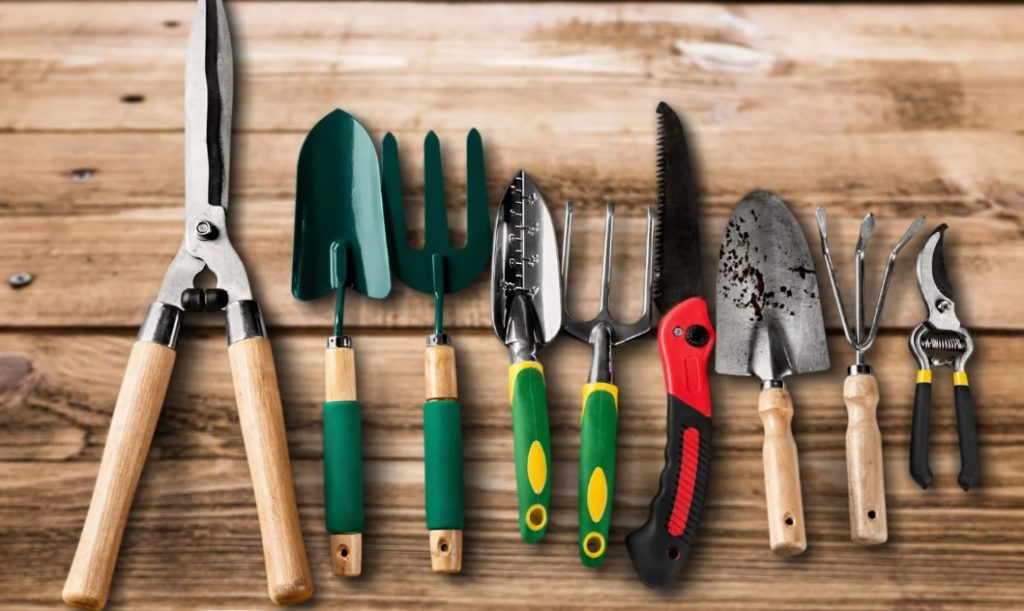
Essential garden tools are categorized by function into digging, cultivating, planting, pruning, and hauling tools. Key tools include shovels, spades, hand trowels, garden forks, hoes, pruners, and rakes. These durable, specialized tools allow gardeners to effectively prepare soil, plant seeds, remove weeds, and prune branches, enhancing garden health and efficiency.
Here is a breakdown of the different types of garden tools:
1. Digging and Cultivating Tools
- Shovel: Broad, curved blade for digging, lifting, and moving soil or debris.
- Spade: Flat, straight-edged blade for edging, cutting sod, and digging straight-sided holes.
- Garden Fork (or Pitchfork): Sturdy tines used for loosening compacted soil, aerating beds, and turning compost.
- Hand Trowel: Essential small hand tool for digging small holes, planting seeds, and potting.
- Hand Cultivator: A small hand tool for scratching the soil surface to remove small weeds.
- Hoe: Used for weeding, breaking up soil, and creating planting rows.
- Mattock: A heavy tool used for breaking up stubborn soil, hardpan, or rock.
2. Cutting and Pruning Tools
- Pruning Shears/Secateurs: Used for cutting small branches, pruning shrubs, and harvesting. Bypass pruners are generally better for living plants, while anvil pruners are for dead wood.
- Loppers: Long-handled shears designed for cutting thicker branches on trees and shrubs.
- Pruning Saw: A specialized saw for cutting thicker limbs.
- Hedge Shears: Used for trimming and shaping hedges or shrubs.
- Edger: Designed to create crisp lines between lawn and garden beds.
3. Planting and Soil Maintenance Tools
- Garden Rake: Used for leveling soil, removing rocks, and breaking up clumps.
- Leaf Rake: A wide, flexible rake designed for gathering leaves and debris.
- Transplanting Trowel: A narrow tool designed for digging deep holes and moving seedlings.
- Dibber: A pointed tool for making holes in the soil for seeds or bulbs.
4. Hauling and Watering Tools
- Wheelbarrow/Garden Cart: Essential for moving soil, compost, rocks, and debris around the garden.
- Watering Can: For precise watering of container plants and seedlings.
- Garden Hose and Spray Nozzle: For general watering.
5. Other Essential Equipment
- Garden Gloves: Protect hands from thorns, dirt, and blisters.
- Kneeler: Protects knees while working at ground level.
- Pruners: Essential for cutting live plants. Bypass pruners are best for green stems, while anvil pruners work best on dead wood.
- Hori Hori Knife: An all-in-one Japanese tool for digging, weeding, and planting.
- Spade/Shovel: Choose a sturdy spade for digging holes and turning soil.
- Garden Rake: Essential for leveling soil and removing debris.
- Hoe: A hula hoe or scuffle hoe is excellent for weed control.
Key Considerations: Choose tools with comfortable grips (ergonomic) and durable, high-quality materials like stainless steel, which resist rust and are easier to clean.
Choosing the right garden tool involves prioritizing quality, comfort, and durability—selecting steel or aluminum over plastic—and matching the tool to your specific tasks, such as choosing bypass pruners for live stems or a Hori Hori knife for versatile digging. Consider weight, ergonomics, and your garden size to prevent fatigue.
Key Factors for Choosing Tools
- Quality Over Quantity: Invest in durable materials like forged steel, which is stronger and lasts longer than stamped steel.
- Ergonomics and Weight: Choose tools with comfortable, padded, or rubber grips to avoid hand fatigue, especially if you have arthritis or weak hands.
- Material: Steel or aluminum heads are robust, while fiberglass handles are durable and lightweight, although wood handles can be more comfortable if maintained well.
- Size Matters: Ensure long-handled tools fit your height to avoid back strain. Choose smaller hand tools for container gardening or tight spaces.