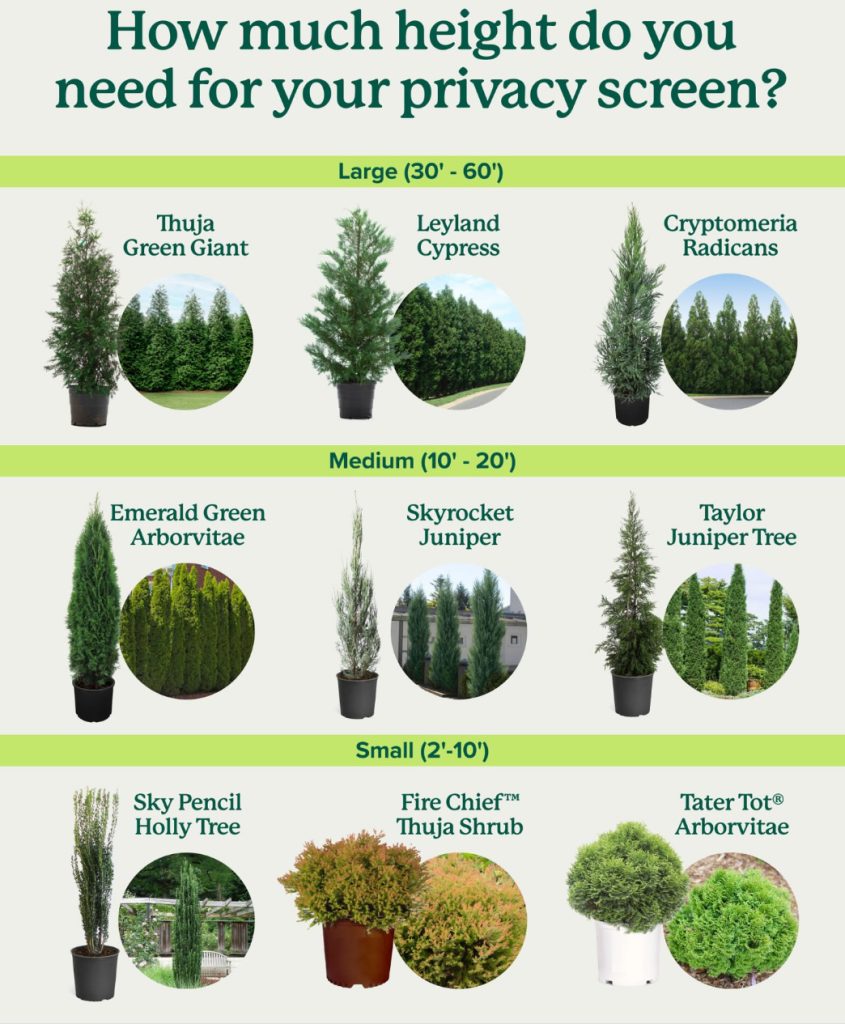
The best hedge bushes depend on your goals, but top options for dense privacy include the fast-growing Emerald Green Arborvitae, the lush “Nellie Stevens” Holly, and the classic, easily-shaped Boxwood.
Selecting the right shrub is easiest when categorized by your specific needs:
1. For Tall Privacy Screens (6-15+ feet)
- Emerald Green Arborvitae (Thuja occidentalis): A narrow, pyramid-shaped evergreen that grows 2-3 feet per year. Requires almost no pruning and creates a solid, fragrant living wall.
- “Nellie Stevens” Holly (Ilex x ‘Nellie R. Stevens’): Features dense, deep-green, impenetrable foliage and pretty red berries in the winter. Grows quickly (up to 3 feet per year) and thrives in full sun or partial shade.
2. For Low / Formal Hedges (2-4 feet)
- Boxwood (Buxus): The gold standard for formal edging. They are slow-growing, highly tolerant of tight shearing, and keep their leaves all year. Great for creating clean, square, or rounded borders along pathways.
- Sprinter Boxwood (Buxus): A faster-growing, deer-resistant alternative to traditional boxwoods that requires minimal pruning.
3. For Seasonal Color & Interest
- Hydrangeas (Hydrangea paniculata): Deciduous shrubs that reward you with massive, show-stopping summer blooms. Varieties like the Quick Fire Fab variety offer color changing flowers that dry beautifully into the fall.
- Forsythia: If you want a splash of early color, this deciduous shrub explodes with vibrant yellow flowers at the very start of spring.
4. For Security & Wildlife Barriers
- Teton Firethorn (Pyracantha): A thorny evergreen that produces beautiful white flowers in the spring and bright orange berries in the fall. Its dense, thorny nature makes it an excellent natural barrier for keeping unwanted visitors out.
💡 Pro-Tips for Hedge Planting:
- Check Your Zone: Always verify the USDA Hardiness Zone for your specific location to ensure the plant will survive local winters.
- Spacing: For continuous privacy, plant bushes close enough together so that their mature widths overlap.
- Pruning: When trimming hedges, make sure the bottom is slightly wider than the top (an “A-frame” shape). This allows sunlight to reach the lower branches, preventing the hedge from becoming bare and “leggy” at the base.